

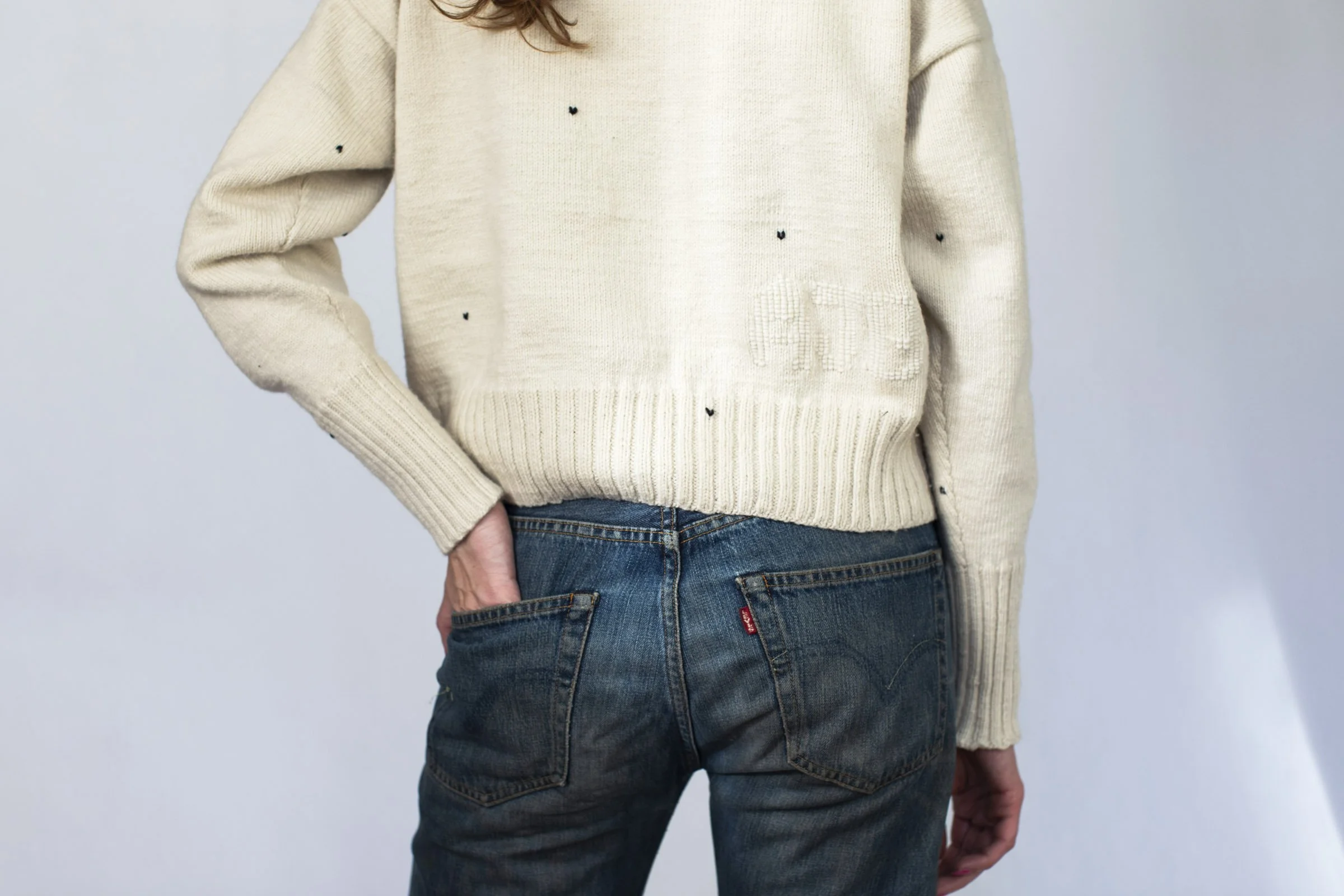
Sweater for a sheep
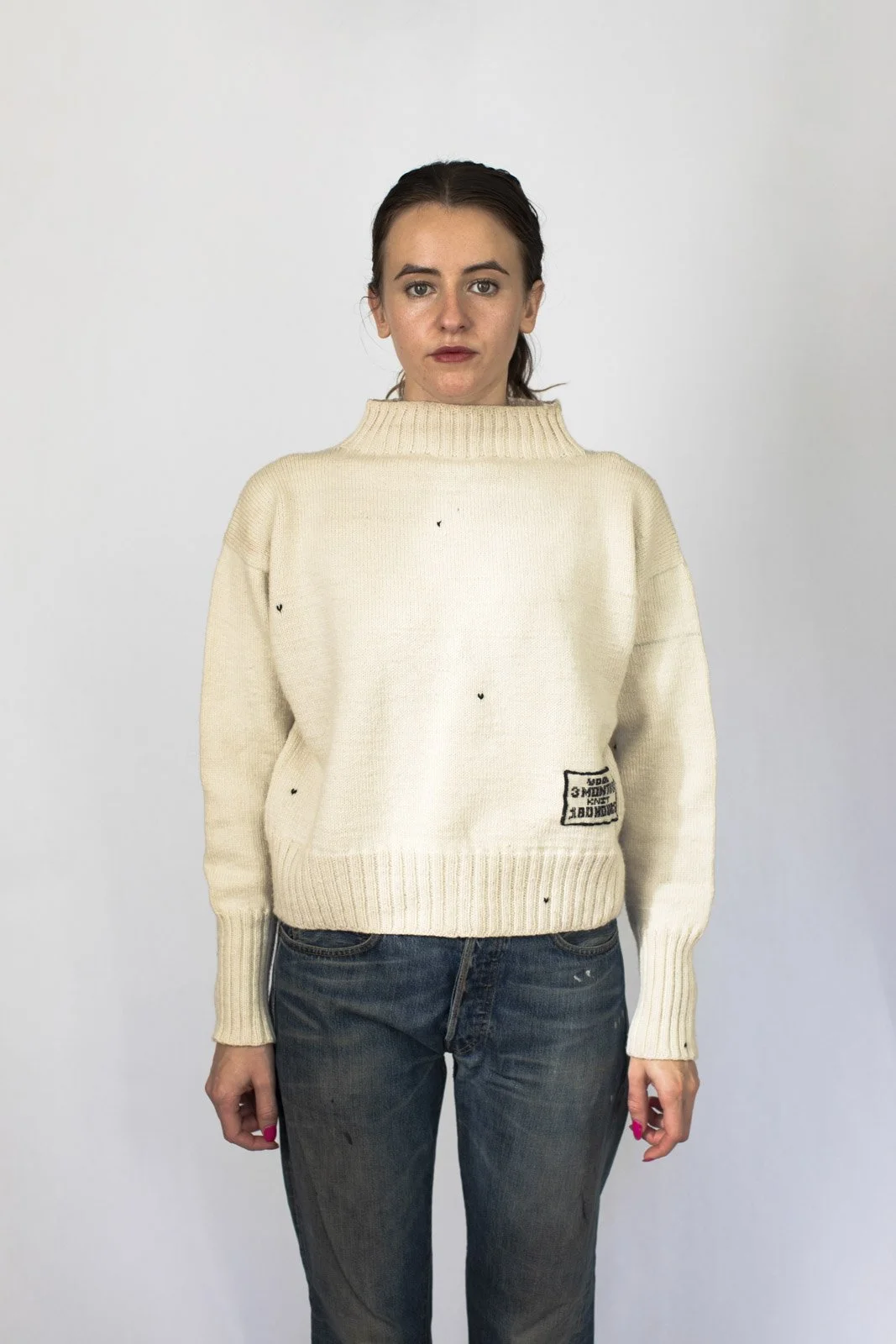
A knit sweater for a sheep (for a human) carefully considers construction techniques and visual language to communicate material importance and highlight the hand of the maker. It is a highly functional garment that is designed to tug at the heartstrings.
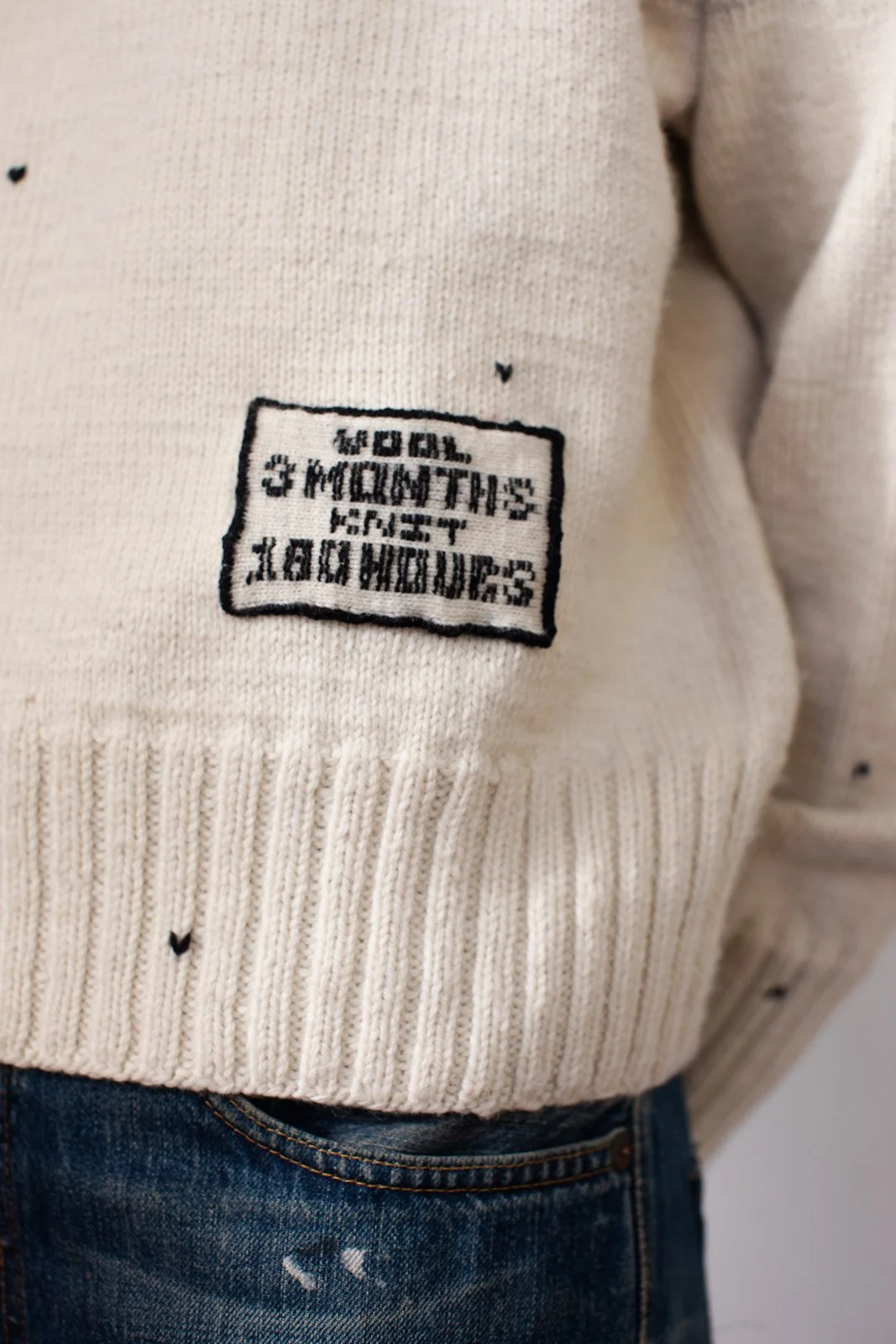
It took the sheep
THREE MONTHS
to grow the wool required to make this sweater
It took me
180 HOURS
to hand knit this sweater
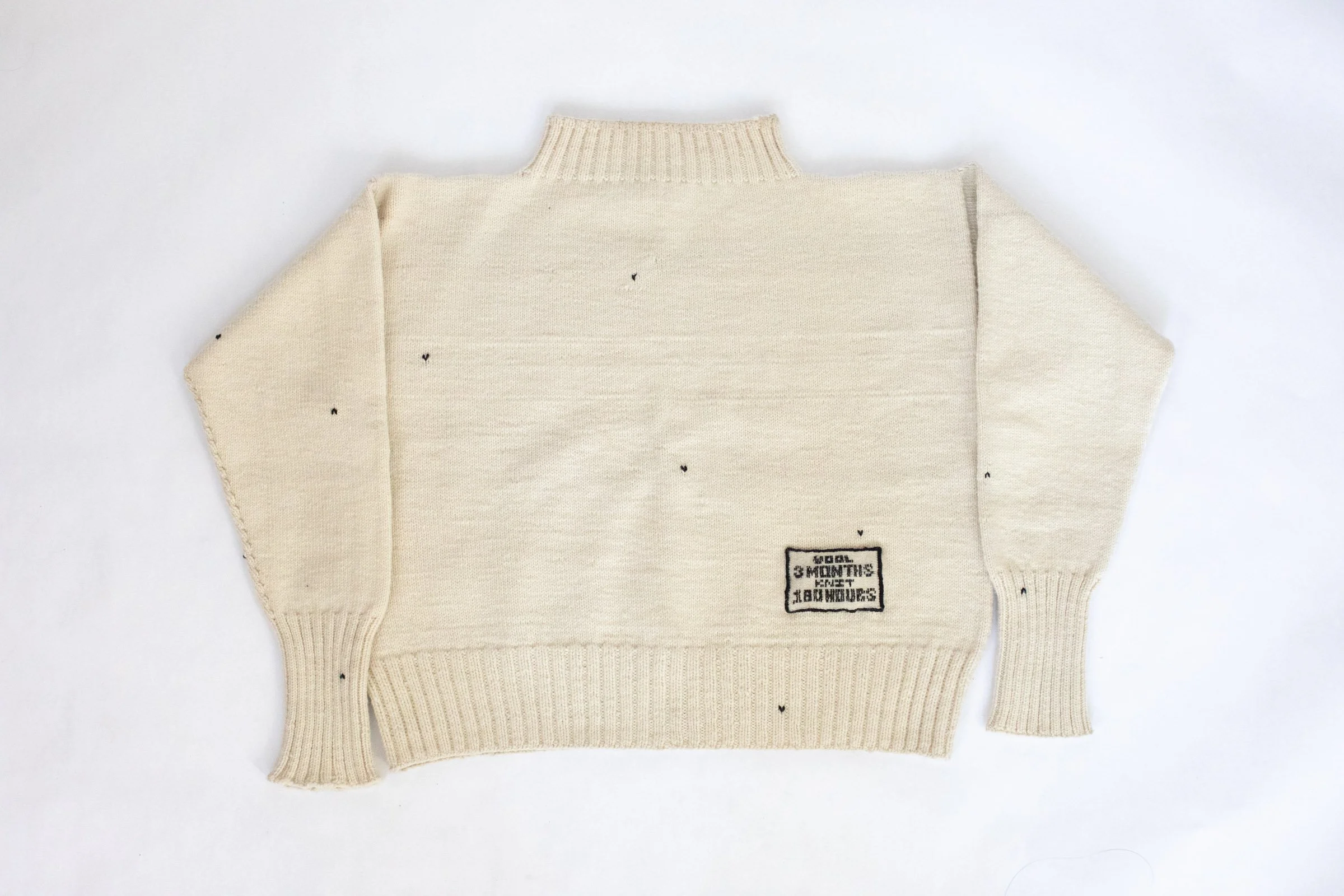
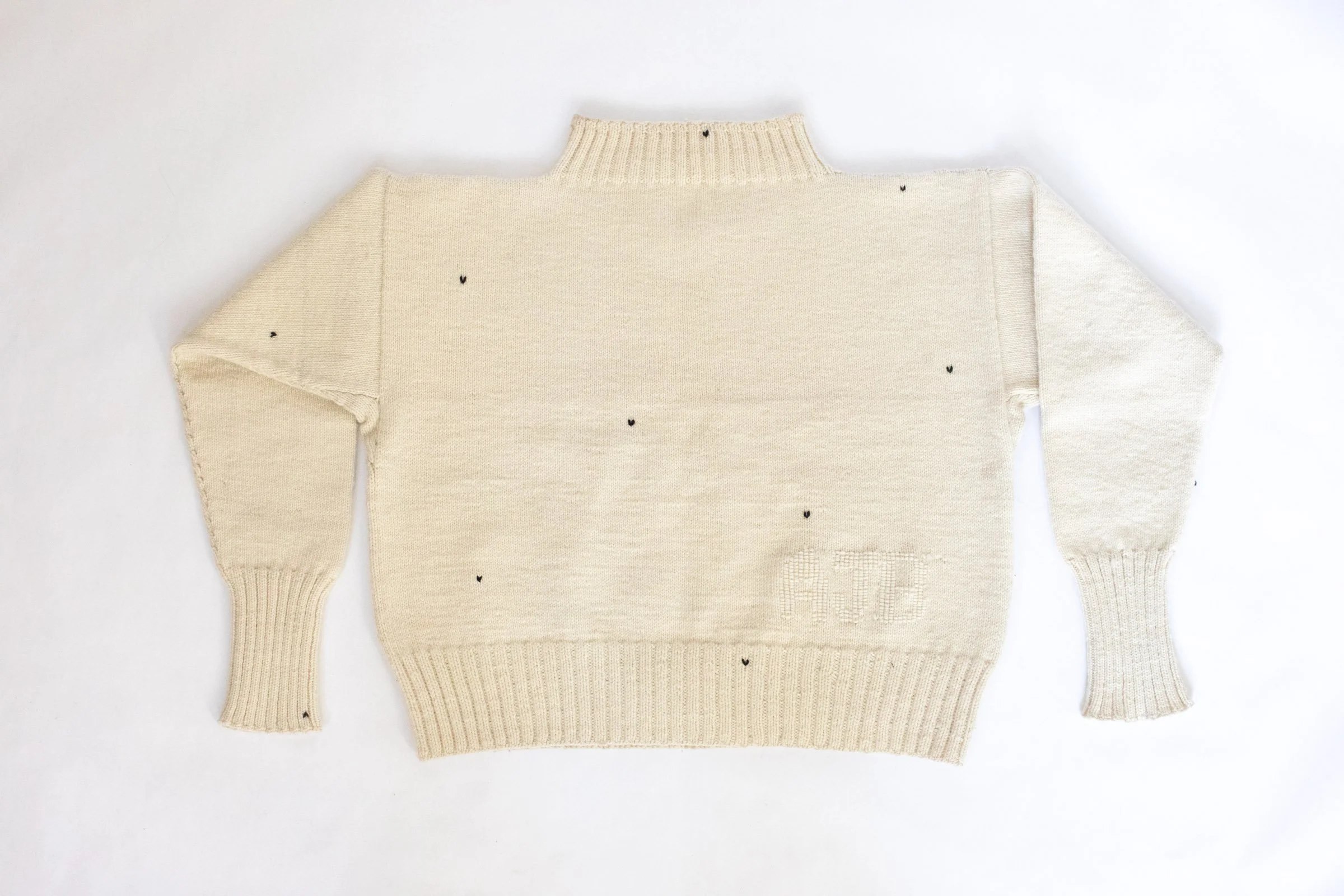
Black stitched highlights increments of five hours of hand knitting
This sweater was modeled after the Guernsey / Gansey sweater. This historic sweater was worn by French, Dutch, Irish, and British fishermen. They were hand knit by wives and mothers who created a pattern that allowed for optional use. It is knit in the round, which makes knitting easier and allows the yarn to be unraveled and reknit as bodies change. The sweater is the same in the front and back, so wear can be evenly distributed. The arms are slim-fitting and have armpit gussets for ease while working. The thin yarn retains natural lanolin from the sheep and is knit with a very tight gague for wind and water resistance.
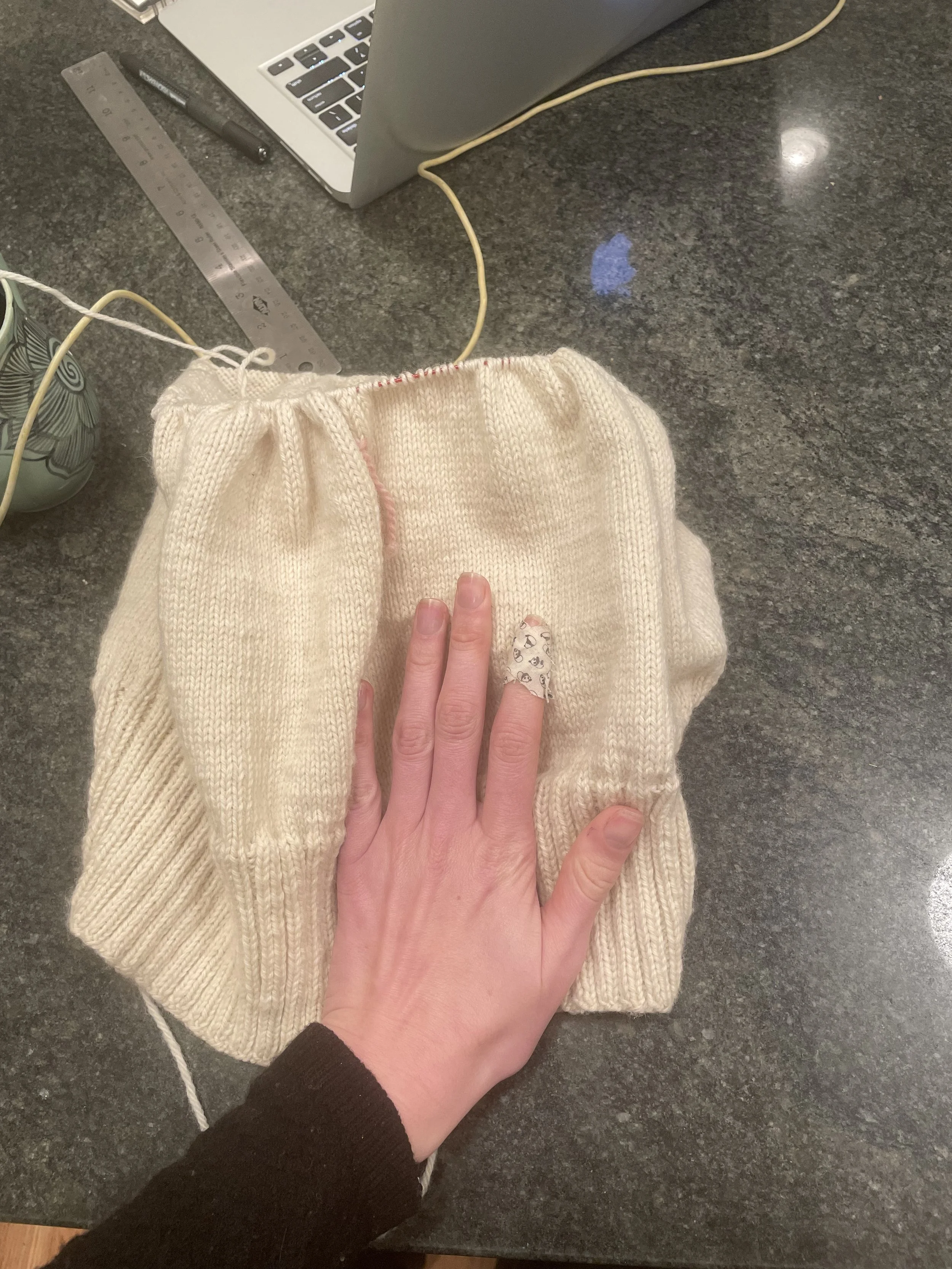
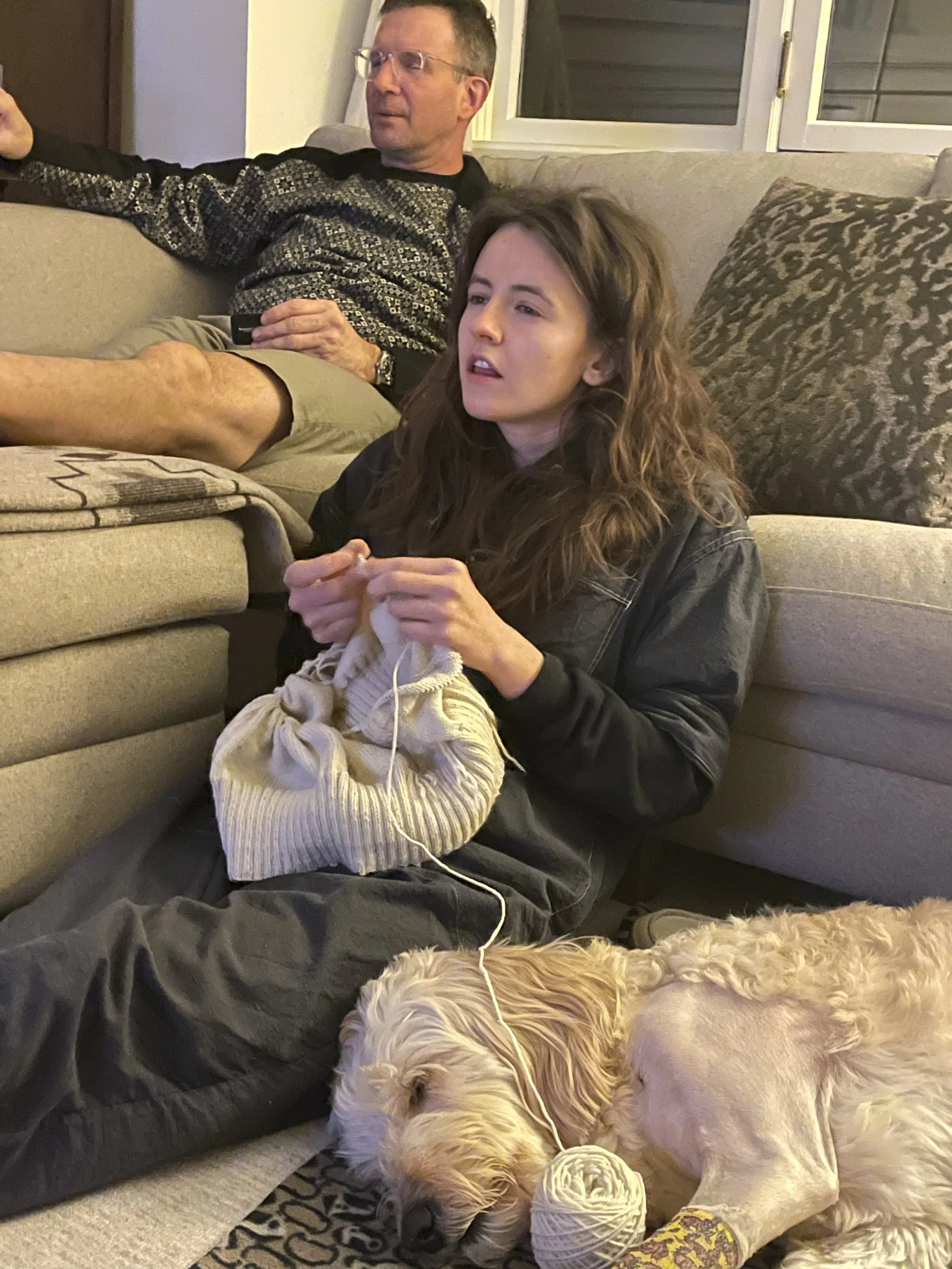
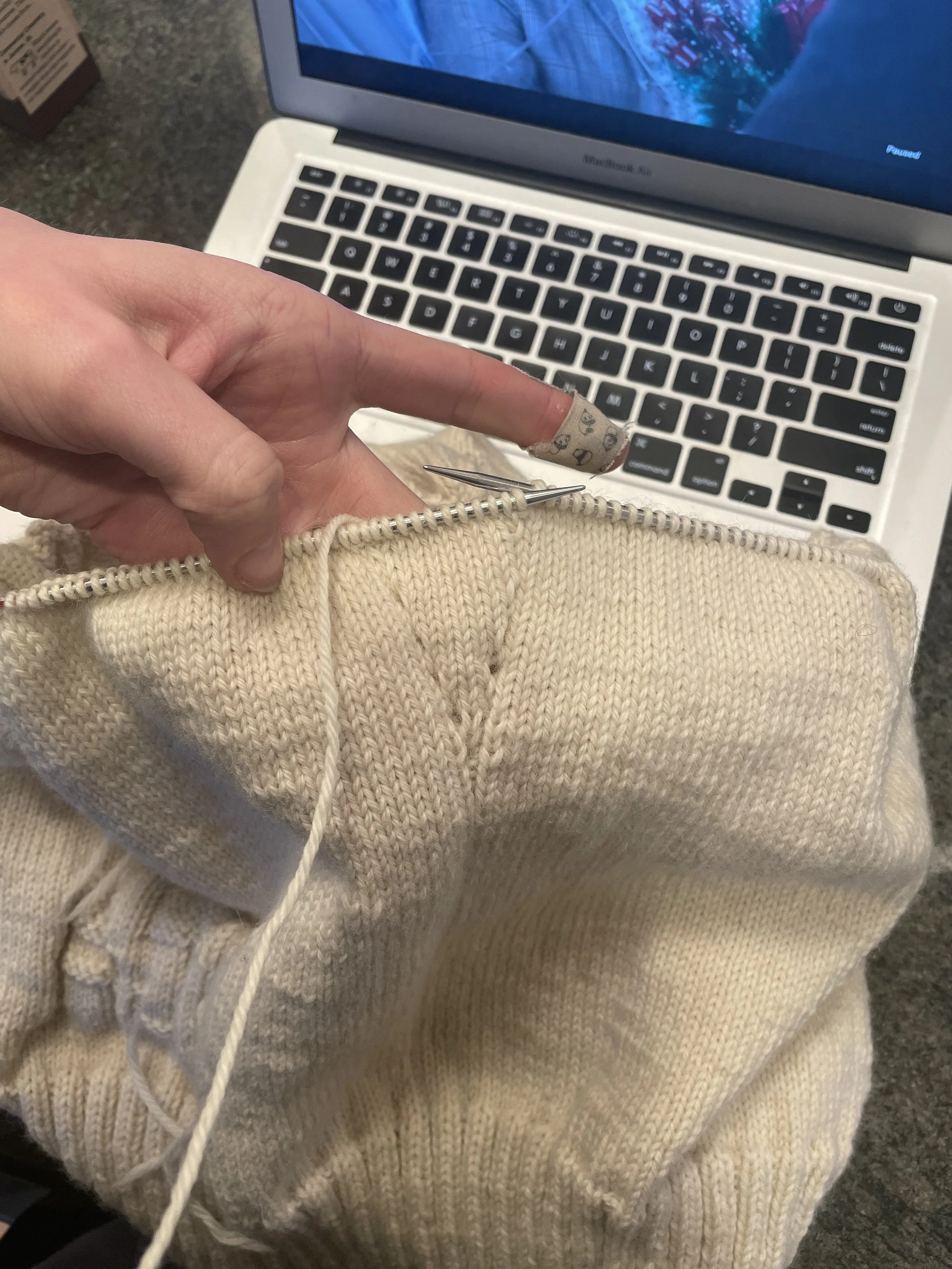
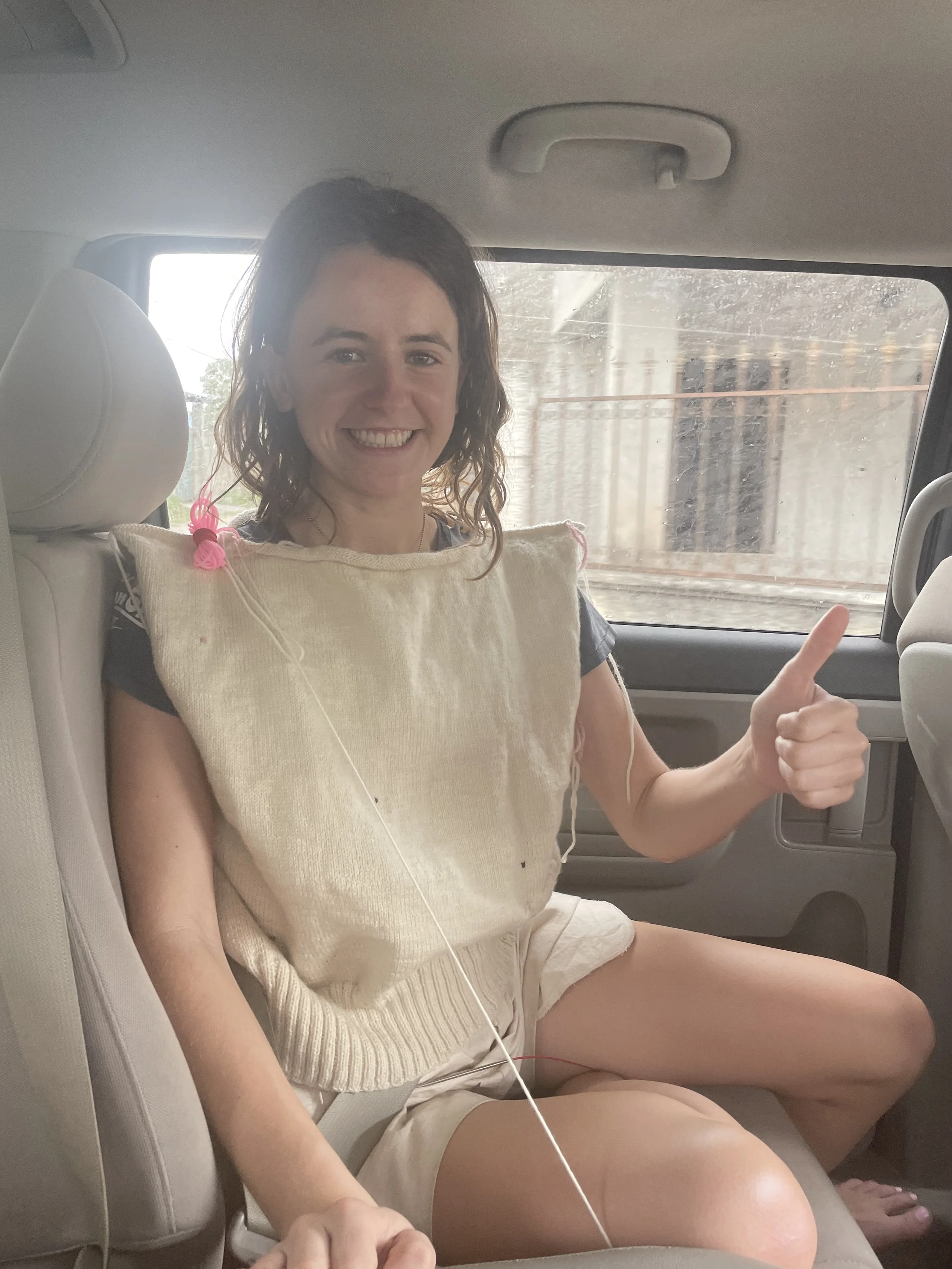
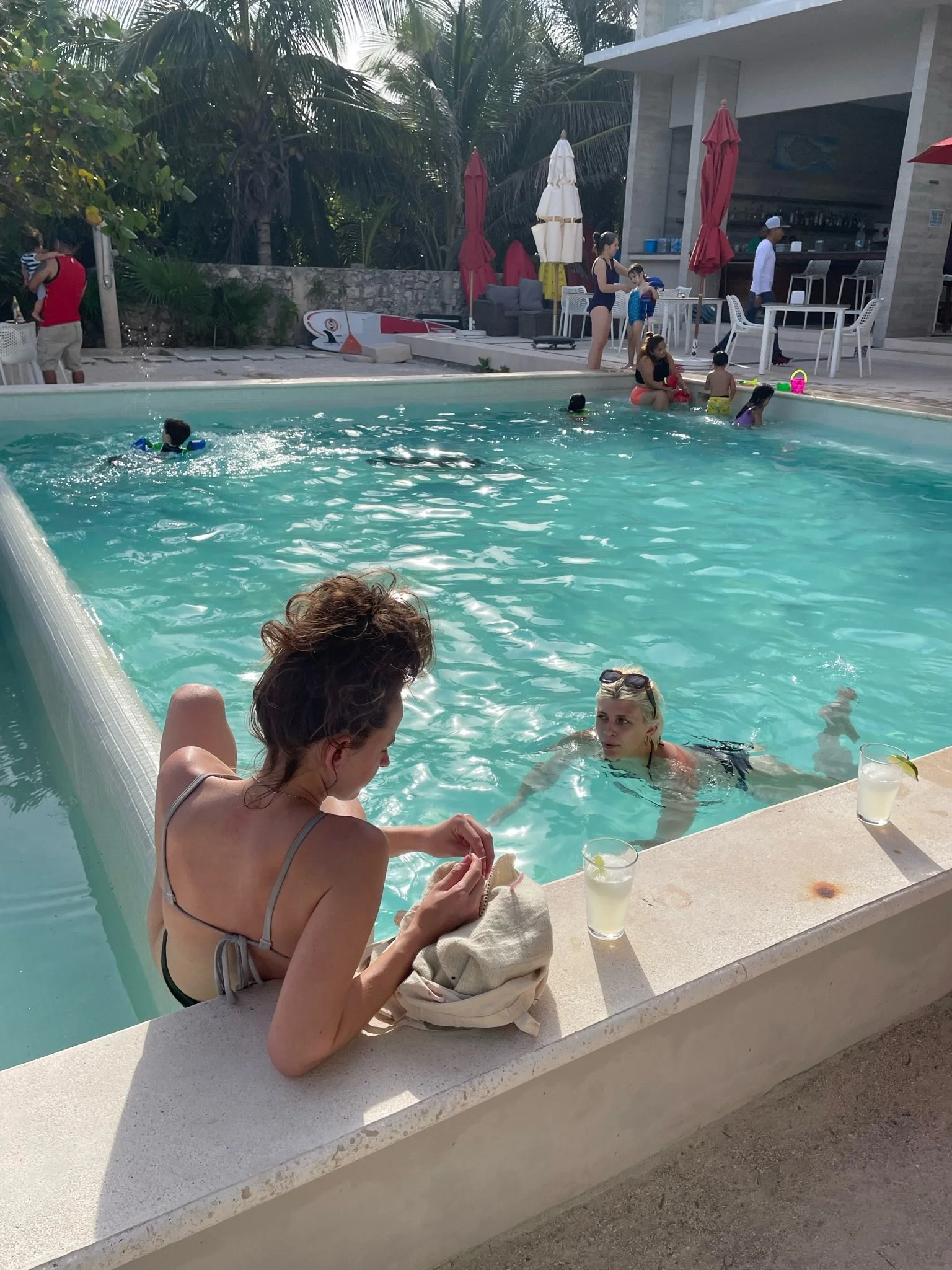
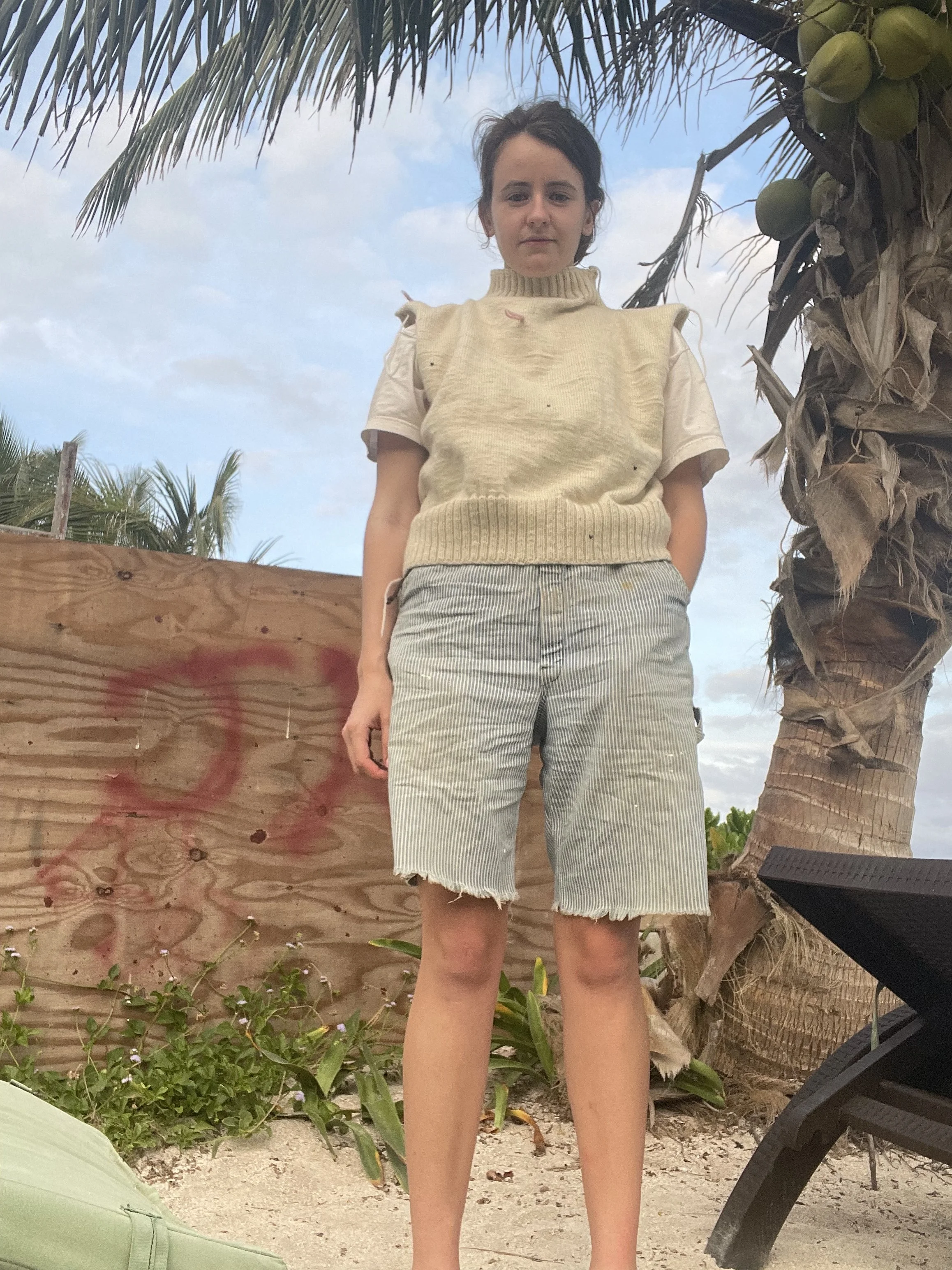
This sweater is the result of a research project about the relationship between sheep and humans. Humans domesticated sheep so long ago that if released into the wild, it’s unlikely they would survive. What does a symbiotic relationship look like between sheep and us? What does ethical (for sheep, land and humans) wool look like? Is anyone doing it? If so, what would be the most honest and thoughtful way to use it?
During the project, I visited the Imperial Stock Ranch in Maupin, Oregon, where they have been raising sheep since 1870. Their ranching practices result in happy, healthy sheep, a booming ecosystem, and gorgeous yarn.
The history and construction of the Gansey sweater make it an equally thoughtful product of the yarn from Imperial Stock Ranch. Which makes this sweater
“for a sheep”
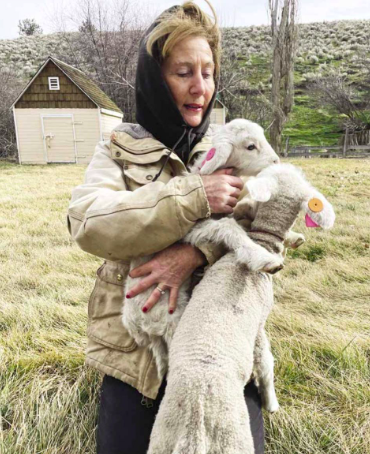
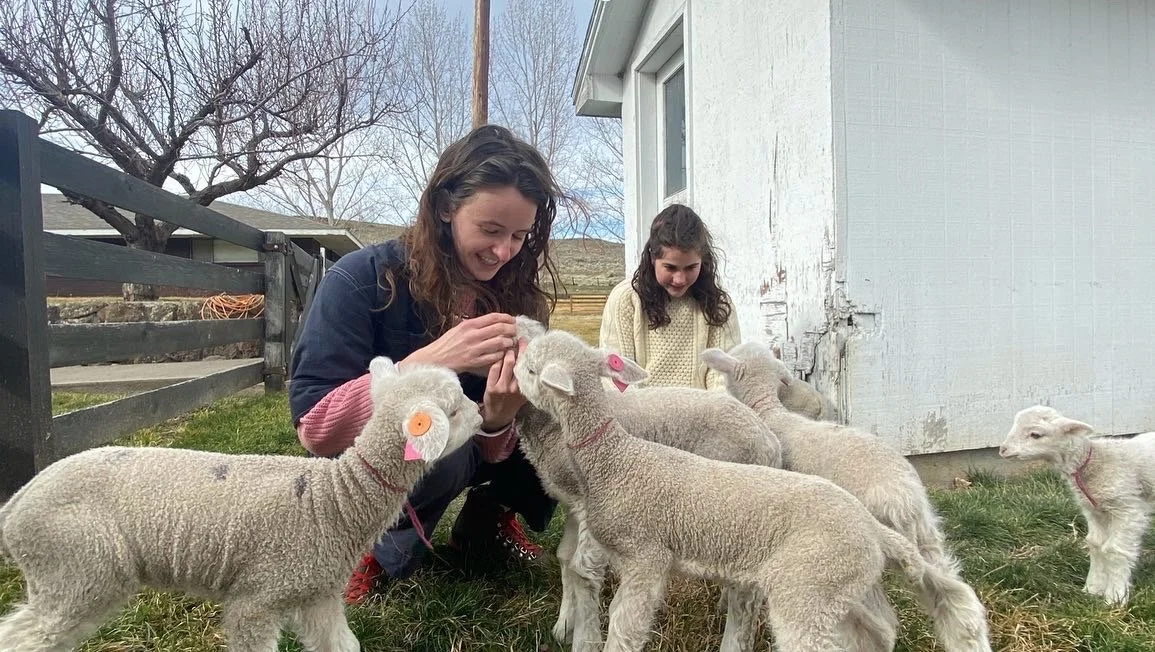
Jeanie Carver, Captain of the Imperial Stock Ranch, is feeding bottle babies Princess and Ralph.
The studio images in this section were taken by Ray Chambers